A very common question about solar panels is whether they work in the winter. The short answer is “yes, solar panels work in the winter”. That’s because we still have light in the winter and solar PV panels generate electricity from light. Of course, solar panels work optimally in the summer, when the intensity of that light is greatest as the Sun is higher in the sky and is around for longer. The summer also has fewer cloudy days, so there’s more of it unobstructed by clouds. That means that, naturally, solar panels generate more electricity in the summer months. But that doesn’t mean they don’t work in winter: they DO work, they just generate less electricity.
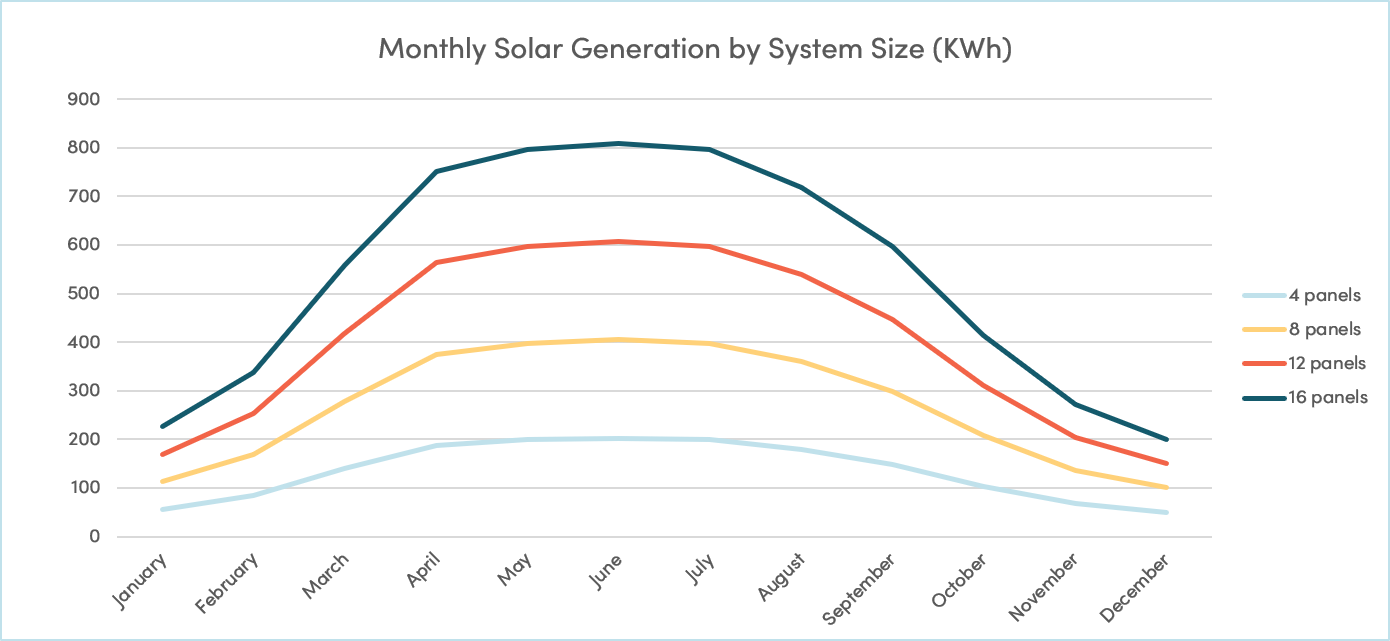
Here's a graph showing how output will vary from your solar panel system over the course of a year, depending on how many panels you have:
Another variation of this question is whether solar panels work well in cloudy weather? Let’s face it, the UK can seem pretty grey sometimes! However, we can give you another short answer: no, not so well. In the UK, the Sun isn’t around as much in the winter, so the panels will generate less than in the summer. Why? Well, put simply, there’s less light around, and that light has lower intensity. It doesn’t mean your panels will stop working – it just means you won’t see as much benefit from them. What you really want in the winter is a clear and sunny day, because you will still see your generation meter ticking away quite nicely!
In the UK, you'll typically find that output is much lower in the dark winter months, and here's a breakdown of what proportion of your annual generation comes in November through to February:
The chart above shows how these compare to the summer months, where generation will be 3-4 times higher.
It’s natural to be concerned that during the winter months, your solar panels’ energy production could be negatively impacted. Luckily, it won’t be (otherwise we wouldn’t be advocating as strongly as are for them). The technology in solar panels is advanced enough, and we know enough about the UK’s weather patterns to really understand the long-term benefits of panel systems on homes. With this in mind, we can confidently say that while you will of course generate more if you live in sunnier climes, the UK climate is suitable for solar panels.
Even if we do think the winters drag on for ages in this country, the UK has enough light to generate the energy needed to make solar panels a worthwhile investment; solar really is a worthwhile investment. One dark, rainy day is not going to be a problem; or even a whole week, so don’t worry!
When we’re in the depths of winter, it probably seems as though the UK gets very, very cold. However, the country doesn’t experience temperatures cold enough to damage solar panels, so you don’t need to worry about this.
Yes. Solar photovoltaic panels work on light, not heat, from the Sun. When it's brighter, they generate more energy, because the light is more intense. If it's cloudy and raining, then it's still light, but the output from the panels will be lower. If it's just started snowing, then same principle applies, BUT if the panels are covered in snow and therefore completely shaded, they won't be generating.
Yes. Again solar panels work on the basis of light - so on cloudy days they will still generate, but it will be lower than if the panels are receiving direct sunshine.
It's probably best to think about output over the course of a year, rather than on individual days and during specific weather events. Those areas of the UK which have typically more sunshine (say the south coast of England) will generate more electricity than the same size of system installed somewhere that experiences more cloud and rain (say Manchester. No offence Manchester, it's just meteorological fact!).
The UK experiences a lot of seasonal variations in sunlight and these differences will impact the amount of energy generated by your solar panel system; you’ll produce a lot more in summer than in winter. It’s just physics. However, you will still generate enough energy in the winter to make investment worthwhile. You just need to consider the impact of the panels across the whole year on your energy bills and carbon emissions to really see the difference.
Before you set up your account and continue your journey to a futureproofed home, just follow the links.