Discover the benefits, personalised for you – it only takes about 90 seconds!

We give you personalised information, make sure you get right installer for your needs (all fully checked and certified).
Get your free report
Complete a few, quick questions to generate your Thermly report. This will give you an estimate of the cost of your installation, and help you understand the impact of your choices on your home.
0


0
0
0

Confirm your details
At this stage, if you’d like an even more accurate estimate, you’ll have the option to provide more detailed, specific information about your home via your Thermly account. Once you’re ready to move forward, we’ll just need to confirm your address and contact details.
2
0
0
0

Compare installers
We'll connect you with up to x3 installers in your area who can supply your tech package. Each one will provide a free estimate of their costs, which you’ll receive in your account, presented in an easy to compare format. If you decide if you want to proceed, simply select the one that suits you best.
3
0
0
0

Survey
Having selected your installer, book a free home survey. The survey generally takes a couple of hours and will allow the installer to provide you with a final quotation for your chosen package, alongside all the relevant documentation and calculations required by the Microgeneration Certification Scheme (MCS).
4
0
0
0

Contract signing
Once any necessary finance arrangements are in place, contracts are signed in your account and you'll have a full record of what's happened and when. You still have a cooling off period of 2 weeks, but you can choose to waive this - entirely it's up to you.
5
0
0
0

Pay your deposit
After the cooling off period the installer makes an application to the power network, and applications for any applicable grants are made, at which point your deposit becomes due. You pay the deposit to Thermly, then we arrange payment to your chosen installer to purchase the equipment and materials required for your installation.
6
0
0
0

Book installation
You'll receive an email inviting you to book an installation date via your Thermly calendar. Installation can take up to 10 days (depending on the complexity) although typically it’s fewer.
7
0
0
0

Completion & Aftercare
The installer will walk you through everything – how to use, manage and control your system. Once completed and your final balancing payments are made, you’ll be able to download all your warranty documentation. You’ll also get a reminder when any servicing is due.
8
0
0
0

1
0
0
0
2
0
0
0
Compare installers
Compare installers
2
0
0
0
3
0
0
0
Survey
Survey
3
0
0
0

4
0
0
0
Installation
Installation
4
0
0
0
5
0
0
0
Completion & Aftercare
Completion & Aftercare
5
0
0
0
1
0
0
0
2
0
0
0
Compare installers
Compare installers
2
0
0
0
3
0
0
0
Survey
Survey
3
0
0
0
4
0
0
0
Installation
Installation
4
0
0
0
5
0
0
0
Completion & Aftercare
Completion & Aftercare
5
0
0
0
Compare installers
2
0
0
0
Survey
3
0
0
0
Installation
4
0
0
0
Completion & Aftercare
5
0
0
0
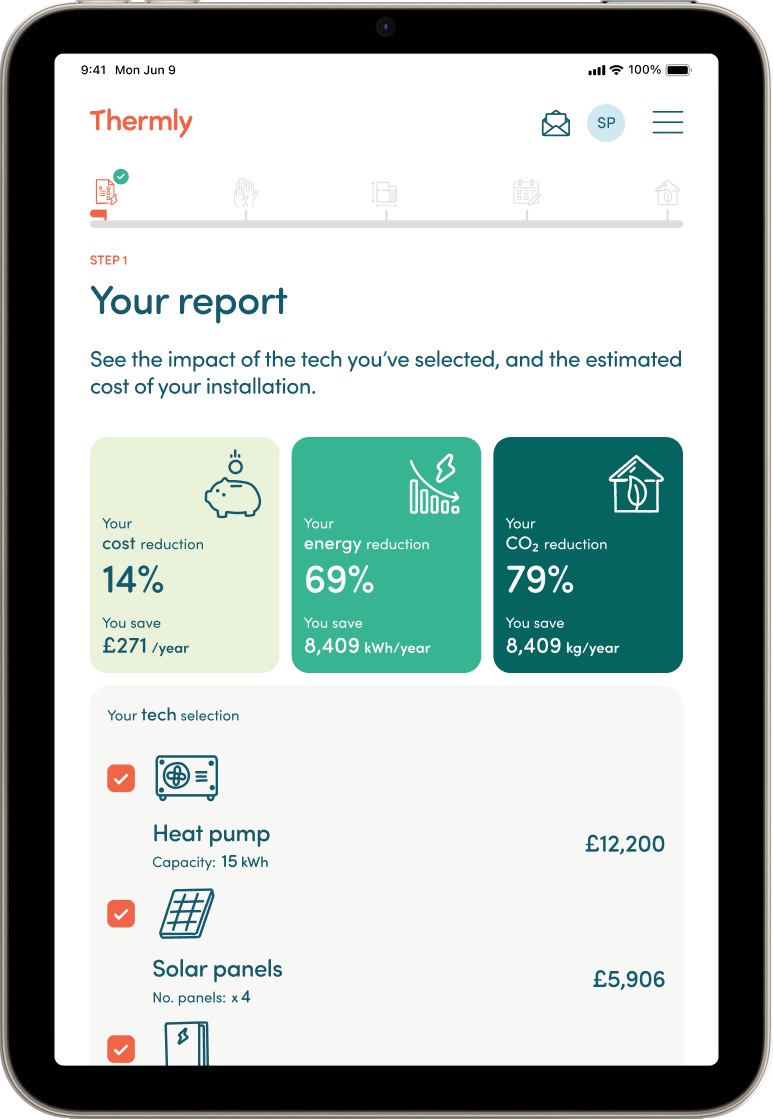

The Thermly platform is free to use, and it’ll only take 90 seconds to get the info you need.
Ready to go? Click the button below to get started. If you'd like to find out more about Thermly and green energy tech, visit our Info hub.

An individual 450Wp solar panel is about 1.75m by 1.15m in area, and around 40mm thick. But bear in mind that’s JUST the panel. When putting panels in on your roof, you would need to allow for mounting/frames and space for fixings and flashings top, bottom and on the sides to ensure the roof is fully water-proofed.
The fire risk associated with solar panels is extremely low, and it’s unlikely that the panels themselves will catch fire. Poorly installed systems, damaged cables/wiring and faulty inverters are more likely to result in any issues. The key to ensuring that the risk is reduced is to use competent, MCS-certified installers with a strong track record – like those you get with Thermly. They will ensure the systems are designed and installed properly. Don’t be tempted to make DIY modifications to your system once installed either!
Yes. When we connect you to our pre-checked and certified installers, they’re all (typically) based within about an hour of your home. The majority of our installers can undertake heat pump and solar installations, and batteries too. Some are heat pump only specialists. Start the process with Thermly today and find out what it might cost you, and what the benefits are, all free of charge. If we can serve your area for the technologies you want, you can then connect to them, all at your own pace.
Firstly your installer needs to be MCS Certified, and the products they specify likewise. MCS Installers must offer a warranty on installation, as well as product warranties for the panels and inverters. These latter warranties will vary depending on the manufacturer and the quality of the product so make sure you get the details you need when discussing your installation with the installer. They must also offer an Insurance Backed Guarantee (IBG) to domestic customers which protects you if they go out of business. All Thermly installers are all able to provide the reliable warranties you need when progressing with a solar panel installation.
The financial impact of the panels will start immediately after being connected, and they last 25 years, making them a very good investment.
Come to Thermly – we’ve done the work for you. When we expand into an area we look at all the available installers who provide the range of technologies we want to install. We do our research, a number of background checks and individually assess whether they’re a good fit for Thermly, all before contacting them. Once we’ve contacted them, our installers then need to provide us with a raft of additional documentation that supports our background assessment, and our regional leads also go and visit them to build a positive relationship from the outset. This is all before they are onboarded and trained to use the platform.
We are currently operating in the following local authority areas:
Yes, provided you also include a piece of kit that enables you to ‘island’ your home in the case of a power cut. Regulations do not permit you to remain connected in the case of a power cut without it – as you’re in danger of electrocuting people working on the network. Expect to pay an additional £600-£900 to provide that islanding capability – but if you need a guaranteed power supply, for example, and you’re in an area that suffers regular outages, it could be a good investment.
There aren’t dedicated solar panel grants, but the Warm Homes Scheme offered by the Government provides financial assistance on a means tested basis to households in certain low-income locations.
Taking away the consultation with your installers and obtaining planning permission (if you need it), the physical aspect of installing solar panels takes between 1 and 3 days, depending on the number of panels and size of roof. You may find scaffolding goes up a few days before your installer starts on site too.
It all depends. Solar panels work more efficiently with south facing roofs, but can also be installed on east and west facing roofs. North facing is absolutely not recommended, unless you live in the southern hemisphere! The other considerations are the size and pitch of your roof, the extent of any shading (for example from other buildings or trees) and the integrity of the roof structure to hold the weight of the panels. Also, listed buildings will likely need consent.
The are no UK government incentives in the form of grants available for PV in the UK – at least for most households. Some Local Authorities have secured funding to support lower income homes with energy efficiency and renewable energy solutions installations typically related to heat rather than PV generation – and there are specific eligibility requirements that need to be considered. You can find out more by visiting this link: %%link%%Apply for the Warm Homes: Local Grant to improve a home - GOV.UK%%link%%. These grants are dealt with by your local authority.
In Scotland, things are slightly different – there is up to £18,000 available for efficiency and heat related improvements, provided as a combination of grants and loans, but you must own, and be living in the property as your primary residence. More details can be found here: %%link%%Home Energy Scotland Grant and Loan%%link%%. For PV, you can get up to £5,000 in interest free loan funding provided it’s a hybrid solar PV/solar thermal system, there is no grant available.
You may want to think more carefully about the Smart Export Guarantee, which requires energy suppliers to pay a (minimal) payment for everything you export once your PV is in place; and far more lucratively, a decent export tariff from a forward thinking energy supplier. You can get up to 15p per kWh exported currently.
They’re relatively low maintenance, but they aren’t “no maintenance”. Read our article %%link%%How long do solar panels last%%link%% for more info.
No idea. Probably. Sorry we don’t do them. We’re guessing you probably live in a flat and are looking to benefit from the outdoor space you have to save money on your energy bills. Panels aren’t small and a couple would fill a typical balcony so you’d lose that usable space. There’s a host of health and safety issues related to doing so as well, and they may suffer from shading either from the barrier or the balcony above. We’re very sorry but there’s not a lot we can do here at Thermly to help you at the moment when it comes to installing solar on a balcony!
Panels can be installed vertically with a suitable wall and appropriate fixings. However you need to be aware of the efficiency drop which results from siting them sub-optimally. Optimally would typically be south facing and at a pitch of about 35 degrees. If we say that’s optimal and therefore ‘100%’, then siting them vertically but on a south facing wall will reduce that to around 70%. If they’re vertical and on a south west facing wall, then it drops again to about 67%. If the only space you have is on a vertical wall, and it’s south facing, then it’s a possibility. If that wall faces east, west or in a northerly direction, we’d suggest there are better things you could spend your money on in energy terms for your home.
Honestly, we don’t know, it’s not something we deal with. We’d rather be open and let you know now, rather than pretend we know what we’re doing when it comes to flexi-solar.
In simple terms you should check the MCS list of approved PV installers. Once you’ve got a list there, you can look at things like performance and warranty indicators. The best PV panels have a degradation rate of less than 0.5% per year (so in 25 years they’re still producing around 87% of their original output), performance warranties of 25 years and above, and efficiencies in excess of 21-23%. Speak to your Thermly installer about the options when they come to undertake a survey, they’ll provide more detail on the options that they install.
There are a few UK based manufacturers like GB-SOL based in Wales. There are many others like from mainland Europe, North America and China. The tier one suppliers – often identified for commercial scale solar due to their financial backing - include Jinko, JA Solar, Longi, Trina, Canadian Solar, Hanwah, and others. There are plenty more, but make sure you check whichever ones you choose are also approved by the Microgeneration Certification Scheme (MCS).
Reputable MCS Certified installers can only use genuine and MCS Certified products, so that’s the route we recommend and that’s the route we help you with. If you’re doing this yourself, however, the usual rules apply. Buy from reputable and known retailers with a physical presence (showroom, shop, warehouse etc), and avoid buying from private sellers on auction websites offering hot deals. You know the ones we mean.
Whether it’s 150W, 250W, 400W or 450W solar panels you’re thinking about for your home you’ll be able to find many from UK based retailers. More importantly, though, you need to think about getting them installed professionally, by MCS-Certified installers. That way you know it will have been done properly and to a high standard. The panels themselves are not the most expensive part of any PV system, you’ll find that inverters, scaffolding and installation costs outweigh the cost of the panels. With that in mind you need to know the costs are fair and reasonable – which is where Thermly comes in. Start your journey now and see how much you could save.
Yes, but we’d always advise you not to, unless there is some excellent reason. Being connected to the Grid means you will pay the standing charge, but this should be offset by the income you earn from exporting electricity, and if something goes wrong being Grid connected means you will also have power. To be truly off Grid, and generate sufficient electricity in the winter, the size of the panel system – and the battery storage you would need, increases significantly. The cost impact of that could then well outweigh the benefits you derive from being off Grid.
Your installers will ensure your solar panels are equipped with the right tech to make this happen – and you will need a Smart Meter to make this work. Once connected, you notify your supplier who will then meter any exported electricity and deduct the value of the electricity exported from your bill. It’ll be a good time to look around and get the best tariff that maximises the value of the energy exported.
Your installer will advise you on the best ways to ensure that birds, squirrels and other animals don’t nest or get lodged underneath your solar panels – but the simplest means is by installing a protecting mesh around perimeter of the panels. Done well and in the right colour, the mesh should not be particularly visible.
They have a hydrophobic coating, which isn’t exactly “self-cleaning”, but does limit dirt sticking and helps rain wash away dust, dirt and bird poo. Read our article “How long do solar panels last” for more info about the minimal ongoing maintenance needs of your PV system.
Our installer network can offer a range of different panel finishes which can be discussed with you if you decide to have a free survey. We increasingly see all-black panels and frames as the choice for many households, as they look a little sleeker on the roof!
Yes, as you would for any major changes you make to your home. Installing solar panels will likely increase the overall market and rebuild value of your home, so you need to ensure your insurance covers this.
Yes. Whilst there is some flexibility about where your inverter and batteries can be located, the process of fixing the panels to the roof and running the necessary cabling will typically mean access to the loft space under the panels is needed. The process specific to your roof and home can be discussed in detail during the survey.
First you will have scaffolding installed to enable safe access to the roof space. The panels are then lifted and secured to the roof by attaching mounting brackets to the rafters, then attaching rails to the brackets and then locking the panels into the rails. In some cases, a ‘cherry picker’ crane may be used but it will all depend on access – something that can be assessed during survey.
Yes, because they generate electricity from light and there’s still some light in the winter, albeit a lower intensity and for a shorter time than in the summer (which is when they work best).
__1-1__1080px.webp)
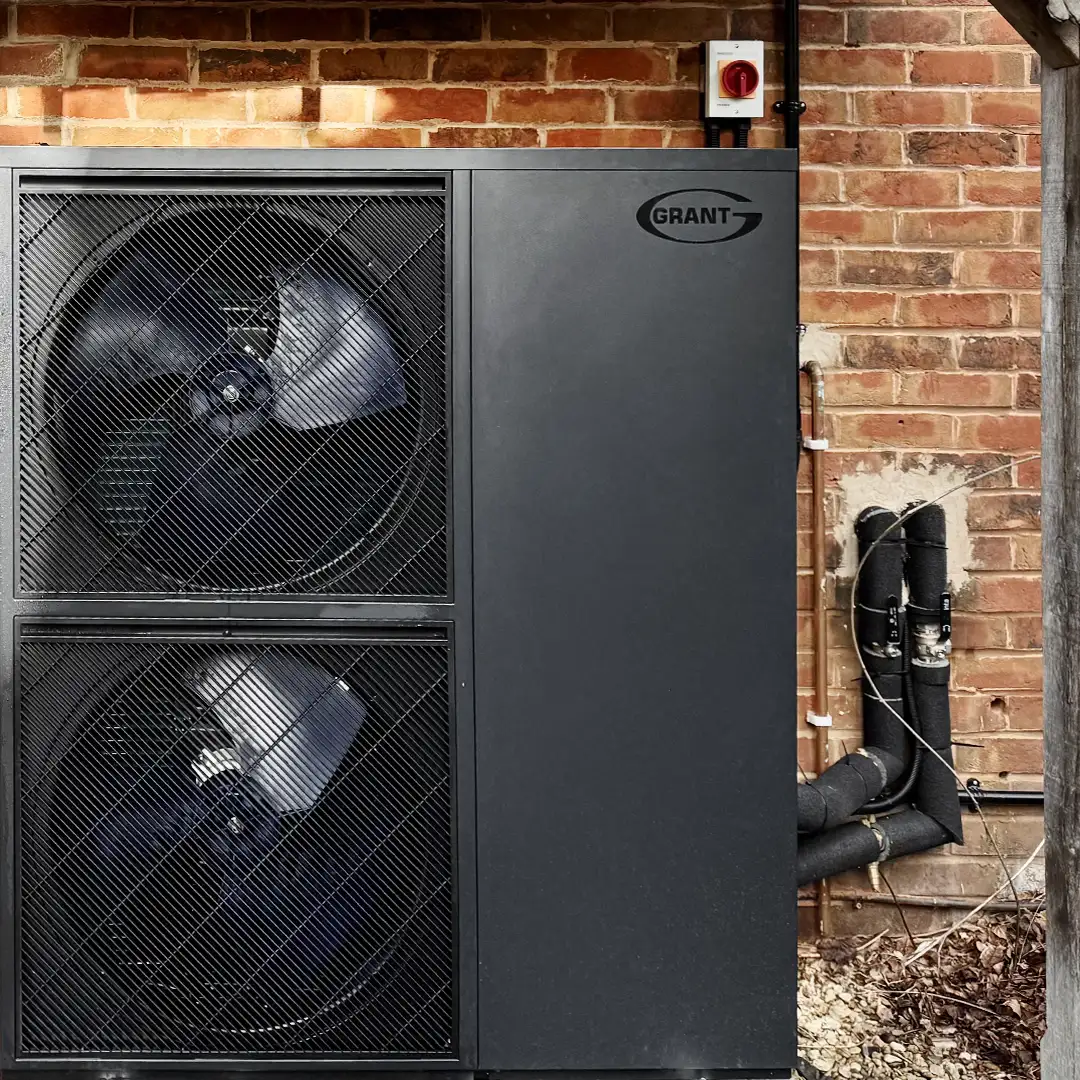
"We had been talking about it for a while, but actually it was when Thermly got in touch we finally just went for it. We had a great installer that came around and spent a few hours with us, explained absolutely everything, we had loads of questions, but [they] explained exactly how it would work."

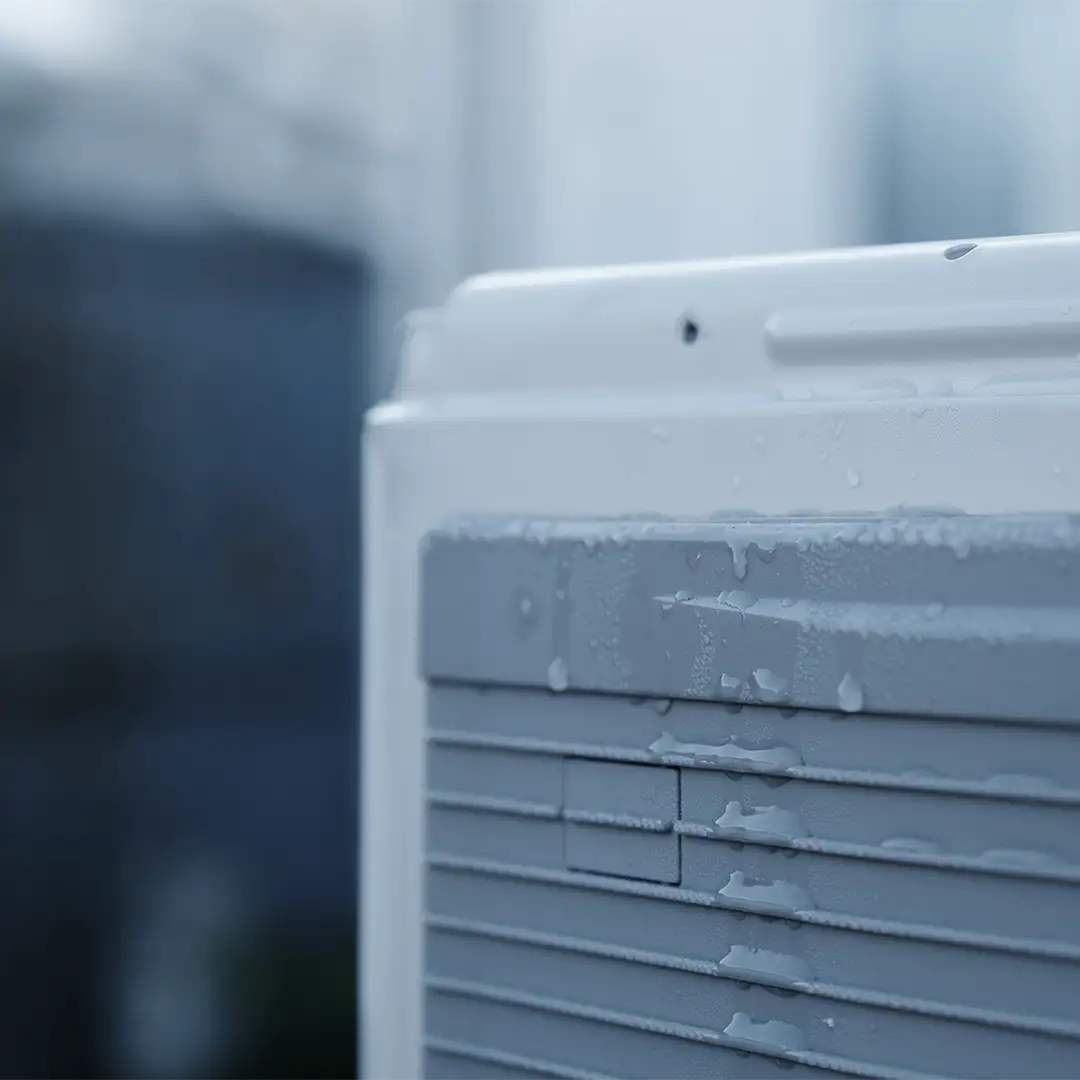
"People are seeing the impact on weather systems and I think the next few years are critical. As individuals we should all be looking to reduce our carbon footprint....It’s futureproofing my home for me."
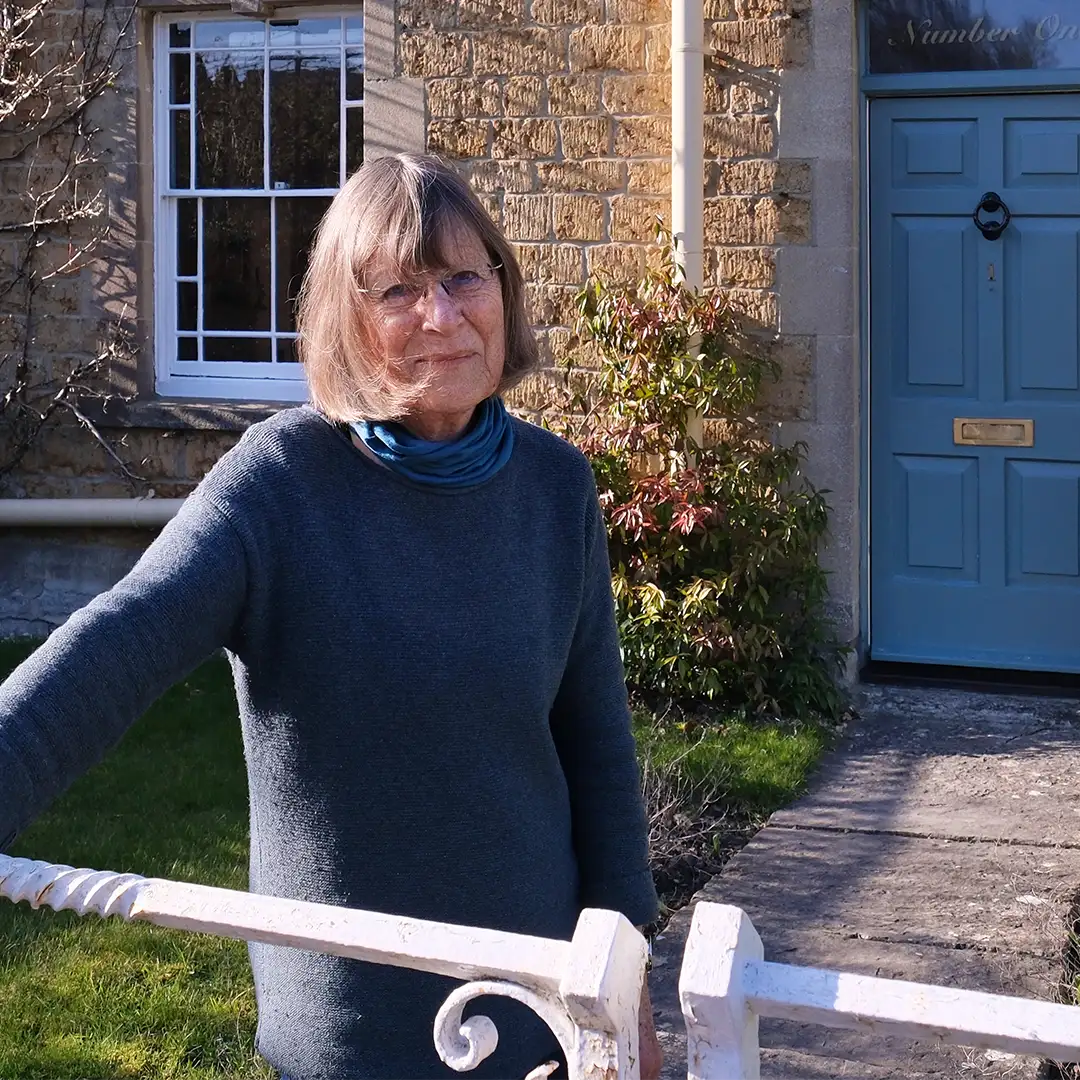
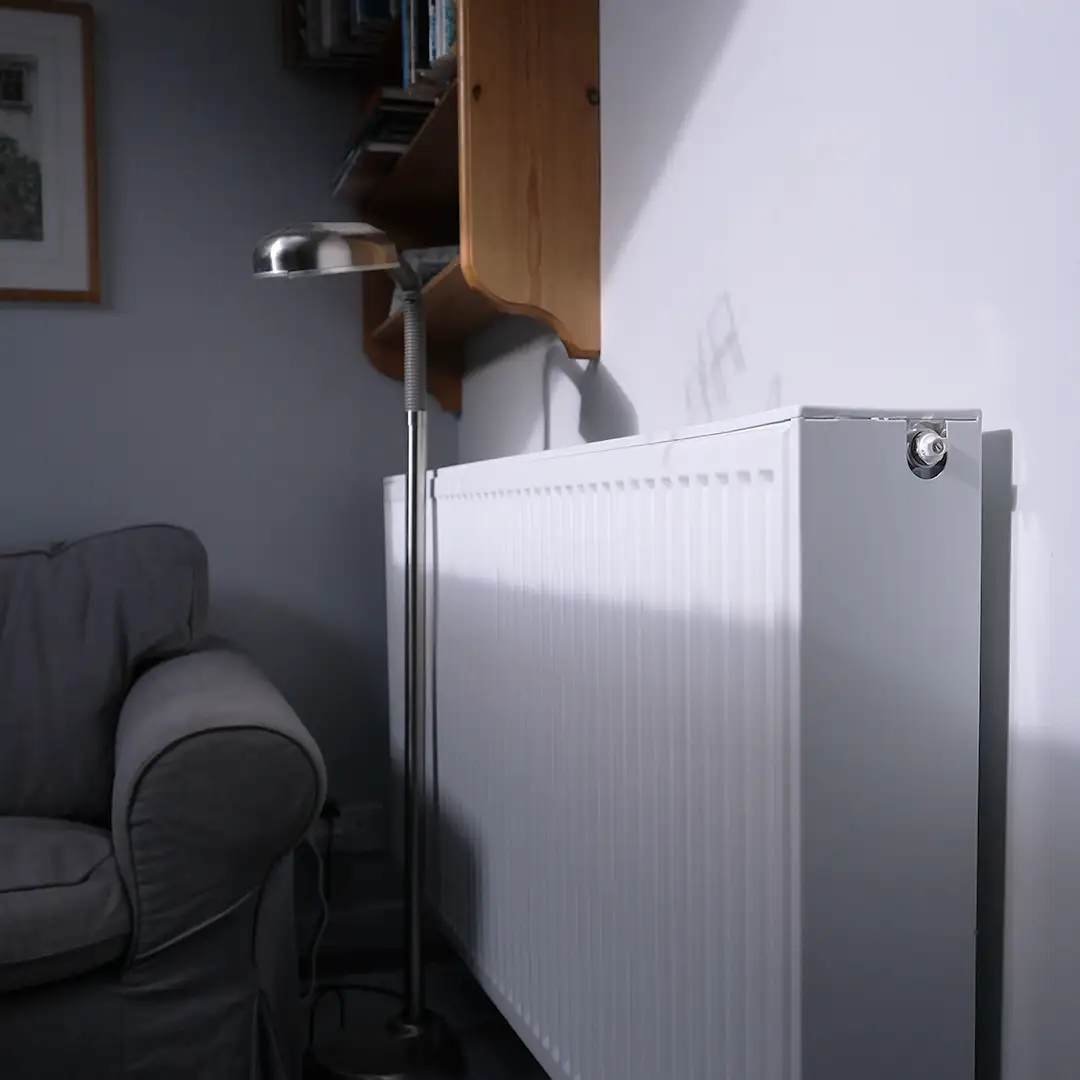
"I would encourage everyone to do it for climate change reasons…I think heat pumps are the solution."
At Thermly we believe it should be easier for people to make decisions that benefit their home, their community, and the planet.
We’re passionate about collaborative projects and initiatives that support this ambition, so we built the Thermly platform to do just that.

Provide tailored and independent advice specific to homeowners’ properties

Connect homeowners to our independently checked local, trusted installer network

Arrange necessary surveys and help access any available funding


Support homeowners through the whole process, including post-installation