With UK energy prices set to rise by 6.4% in April 2025, the average household is expected to see an increase of around £9 per month on their energy bills. This is part of a wider trend—energy prices have been highly volatile in recent years, including a 54% increase in the energy price cap in April 2022. Households that rely on fossil fuels are especially exposed to these fluctuations.
Investing in heat pumps, solar panels, and battery storage allows homeowners to gain more control over their energy usage, reduce long-term costs, and make their homes more future-ready. These technologies not only help reduce bills but also unlock government-backed financial support and promote a more sustainable lifestyle.
This guide explores the average financial implications of going green—including typical costs, potential long-term savings, and available grants—to help you make a well-informed decision.
Switching to renewable energy systems is an upfront investment that can deliver significant long-term returns. The exact figures will depend on your property and energy usage, but average savings can be substantial over time.
Figures shown are based on typical mid-sized residential systems and average UK household energy usage. Actual results may vary depending on property size, insulation levels, usage patterns, and local climate. Combined system savings are estimated using integrated performance across components.
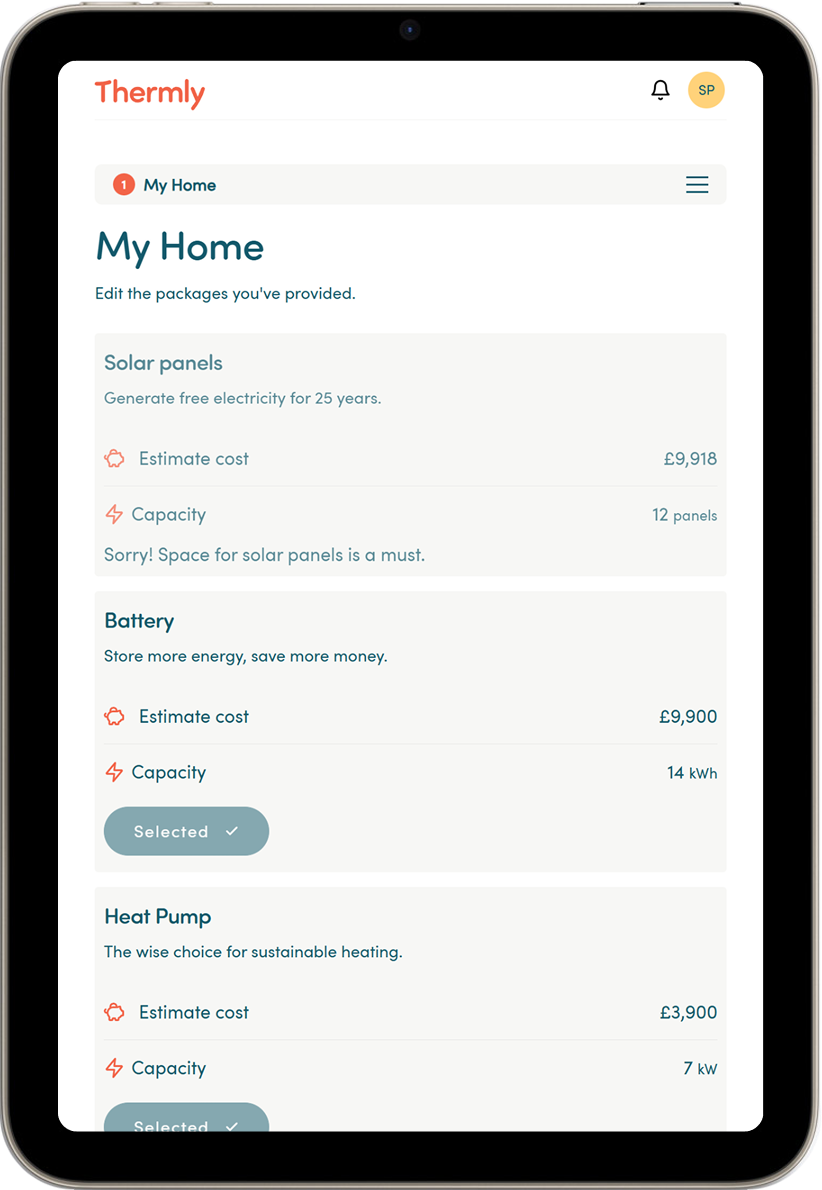
A heat pump system in a typical three-bedroom home usually costs between £5,000–£7,000 after applying for the Boiler Upgrade Scheme (BUS) grant. Savings can vary significantly, with greater reductions likely for homes currently using oil, LPG, or electric storage heating. The £7,500 BUS grant helps offset upfront costs, making heat pumps a more viable long-term option.
Solar panels typically cost between £5,000–£9,000 to install and can reduce electricity bills by around ~£700 annually on average. With the potential to earn money from exported electricity, some homeowners may achieve payback within 8 to 12 years, depending on system size, tariffs, and energy use.
Battery storage systems usually cost between £4,000–£6,000 and help make better use of cheaper, off-peak energy rates. Homeowners using batteries can save approximately ~£300 per year, depending on their usage patterns and tariff.
Combining technologies leads to the greatest savings and offers more independence from the grid, especially during peak times or outages.
There are several UK government schemes designed to make renewable energy adoption more accessible:
These incentives, combined with long-term cost reductions, make green technology a compelling financial choice for many UK households.
Beyond the financial advantages, adopting green energy technologies has a major environmental impact.
By combining all three technologies, a typical home can cut emissions by 2–3 tonnes annually—roughly the equivalent of taking a small petrol car off the road for 7,500 miles per year.
Before you set up your account and continue your journey to a futureproofed home, just follow the links.


Yes, significantly more efficient. A brand-new A-rated gas boiler operates at around 90% efficiency — meaning 90p of every £1 of gas you buy is converted into useful heat. A heat pump typically operates at 300–350% efficiency, meaning every £1 of electricity you spend generates £3–£3.50 worth of heat. As the electricity grid becomes greener and prices become more competitive, this advantage will continue to grow.
Yes, air source heat pumps are designed to operate efficiently in temperatures as low as -15°C to -20°C, well below anything typically experienced in the UK. Their efficiency does reduce as outdoor temperatures drop; a heat pump with a CoP of 3.5 at 7°C might have a CoP of (say) 2 at -5°C, but they continue to heat your home effectively throughout a typical UK winter. Ground source heat pumps are even less affected by cold air temperatures because they draw heat from the ground, which stays at a relatively stable 8–12°C year round in the UK, regardless of air temperature.
If you want your solar panels to meaningfully offset the running costs of a heat pump, you will need a larger system than average. A heat pump in an average UK home uses approximately 3,000–5,000 kWh of electricity per year on top of your existing household consumption - if you’re looking to generate 5,000kWh you will need a 5-6kWp system, which is around 12-13 panels. If you want to cover all the other electricity use (on average, over the course of a year), then 22-24 panels will be needed. Rather than trying to generate 100% of your demand from solar, an alternative approach is to maximise the roof space you have available and pair the system with a battery so the solar electricity generated during the day powers the heat pump in the evening when heating demand is highest.
Each standard solar panel takes up approximately 2 square metres of roof space. A typical 10-panel system therefore requires around 20 square metres of usable roof area, roughly the size of a small bedroom. For a 3-bedroom semi-detached house, the average south-facing roof slope provides 20–30 square meters of space (assuming there are no dormers or Velux type windows), which therefore would accommodate 10–14 panels. Your Thermly installation team will assess your roof during the survey, accounting for any obstructions such as skylights, chimneys, or roof vents, and design the optimal layout within your available space and budget.
Read this article: Are solar panels worth it in the UK? | Thermly. We explain the full details here and provide a useful and concise guide for you. But the short answer is—in the main, yes. They’re a proven technology with a good payback—so if you have the right roof space and the ability to invest in them, then go for it.
The average home that uses a gas boiler and has no electric vehicle uses about 3,500 kWh per year. The amount of solar electricity you can generate varies depending on your location, but on average it’s about 900 kWh per kW of solar panels each year. So on that basis, you’ll need to install about 4kW of solar PV panels to generate the same amount of electricity over the course of the year. That does NOT mean you won’t still be importing electricity, as it’s not all generated when you need it, especially in winter months. You’ll also probably be exporting in the summer. 4kW is about 8-10 panels, depending on the manufacturer and products used, and about 16-20 m² of roof space.